Rivers for Wimborne
About Us
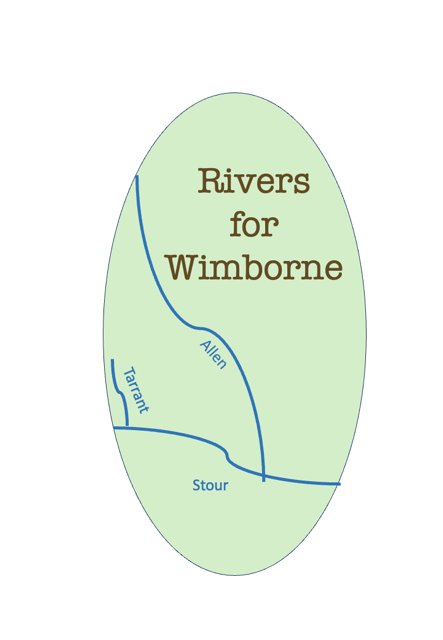
This subgroup of Wilding Wimborne comprises of volunteers who are interested in helping to protect the local Rivers Allen, Stour and Tarrant in and around Wimborne through monitoring and community care.
Rivers and streams are one of our most important resources, sustaining human life and supporting diverse habitats and species.
Dorset has some beautiful streams, rivers and wetlands which are home to a lot of incredible wildlife such as water voles, otters, damselflies, mayflies, invertebrates as well as fish and beavers. Many of these are chalk streams of which there are only 200 in the world, with 85% of them being found in the UK in South and East England. This makes our local chalk streams and rivers in Dorset very important indeed while the River Valleys contain important wetlands and meadows which are extremely important for wildfowl and birds.
The Rivers, Stour and Allen flow through Wimborne and the Tarrant is one of the tributaries of the Stour.
The Rivers of Wimborne
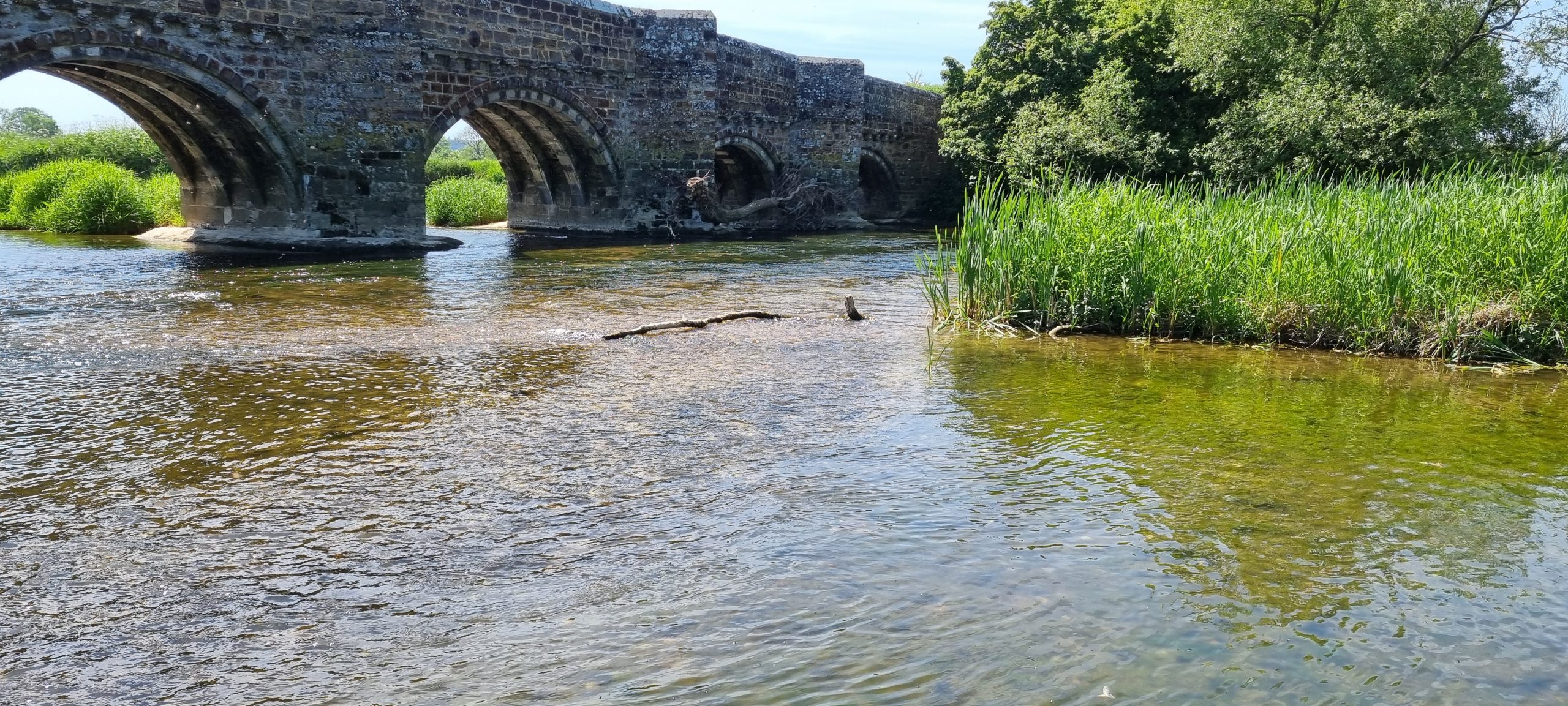
The River Stour is 61-miles long and flows from Stourhead in Wiltshire through the heart of the Dorset countryside, including the Blackmore Vale, Sturminster Newton, Blandford and Wimborne, before draining through Christchurch harbour and into the English Channel. It is highly prized for its scenic walks, rich wildlife, and local history
https://www.dorsetcatchments.co.uk/catchments/stour/
The River Allen is a 14-mile (21 km) rare chalk stream in East Dorset. It rises as a winterbourne near Monkton Up Wimborne, flowing south through the Cranborne Chase Area of Outstanding Natural Beauty (AONB) before joining the River Stour in Wimborne. The river is steeped in history. Its original name was “River Win” (meaning small stream), which gives Wimborne Minster its name. Along its banks sits the Knowlton Church and Henge, a Neolithic ceremonial monument and a large number of mills.
Landscape Recovery: The River Allen Landscape Recovery project is an ongoing, ambitious initiative by local landowners to revitalize the full length of the river Allen into an interconnected, undisturbed habitat corridor.
The River Tarrant is a 7.5-mile (12 km) chalk stream and winterbourne in north Dorset. Rising near Cranborne Chase, it flows south to join the River Stour near Spetisbury and lends its name to eight charming, historic, and distinct villages. Despite the seasonal drying, the Tarrant is a highly productive chalk stream that acts as a vital spawning ground for salmon and brown trout in the middle reaches of the Dorset Stour catchment.
What's The Issue?
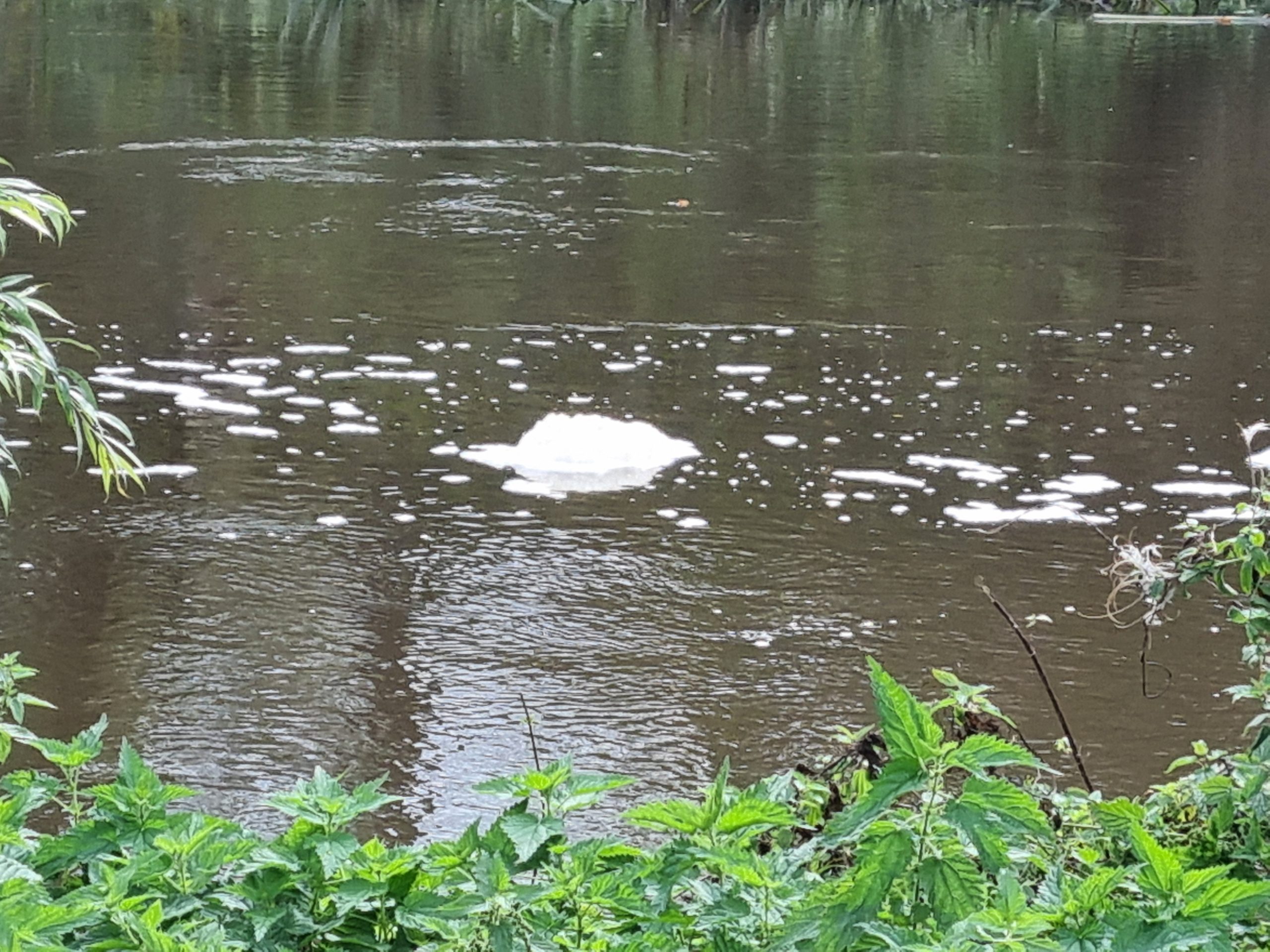
Dorset’s 1,049 km of rivers and globally rare chalk streams face enormous pressure, with less than 15% currently in good ecological condition. They remain vital wildlife havens, but suffer from severe environmental stressors, historic habitat alteration, and fluctuating water levels.
- Pollution: Agricultural runoff and raw sewage discharges reduce water quality throughout the river catchments.
- Historic Modifications: Dredging, canalisation and straightening of rivers, redirecting them through mills have degraded natural wetlands and reduced summer flows, while increasing the risk of flooding.
- Biodiversity: Abstraction and pollution have impacted on populations of otters, water voles, beavers and their supporting ecosystems.
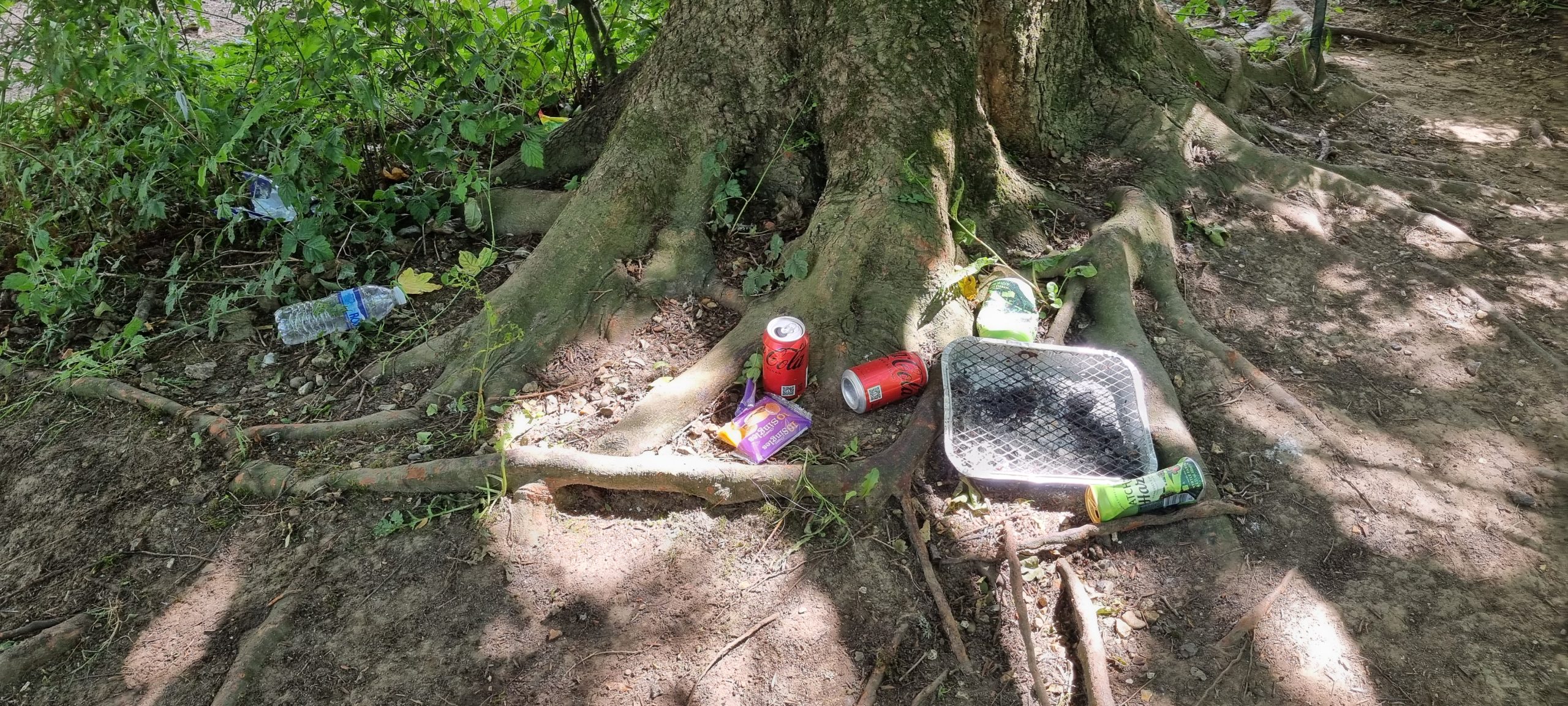
- Recreation: Increasing levels of recreational activity can disturb wildlife. This includes litter, dogs entering the water having been recently treated with spot on treatment for fleas and ticks as the chemicals can kill the invertebrates. https://www.gov.uk/government/news/pet-owners-urged-to-take-care-when-using-flea-and-tick-treatments-to-help-protect-our-waterways
- Invasive species: e.g Himalayan Balsam which out competes the native flora along the riverbanks.
What Do We Do?
Through schemes such as Water Guardians and Riverfly Monitoring which are co-ordinated by Dorset Wildlife Trust, and Earthwatch Europe’s waterblitz, the Rivers for Wimborne Group aim to provide data and evidence that authorities can use to make the case for action to protect and restore rivers and their banks to help wildlife thrive.
Data is uploaded to RiverHub which is a centralized, digital monitoring platform used to track and analyse the health of rivers across Dorset and the wider Wessex region. Coordinated by local wildlife and river trusts and funded by Wessex Water, the RiverHub Dashboard serves as a data hub combining scientific testing with citizen science
Rivers for Wimborne also hold events to show the public what amazing wildlife lives in the rivers and help them understand what is happening to our rivers and why, and the actions we can all take to help look after them.
We also undertake work to remove invasive species such as Himalyan Balsam.
Water Guardians
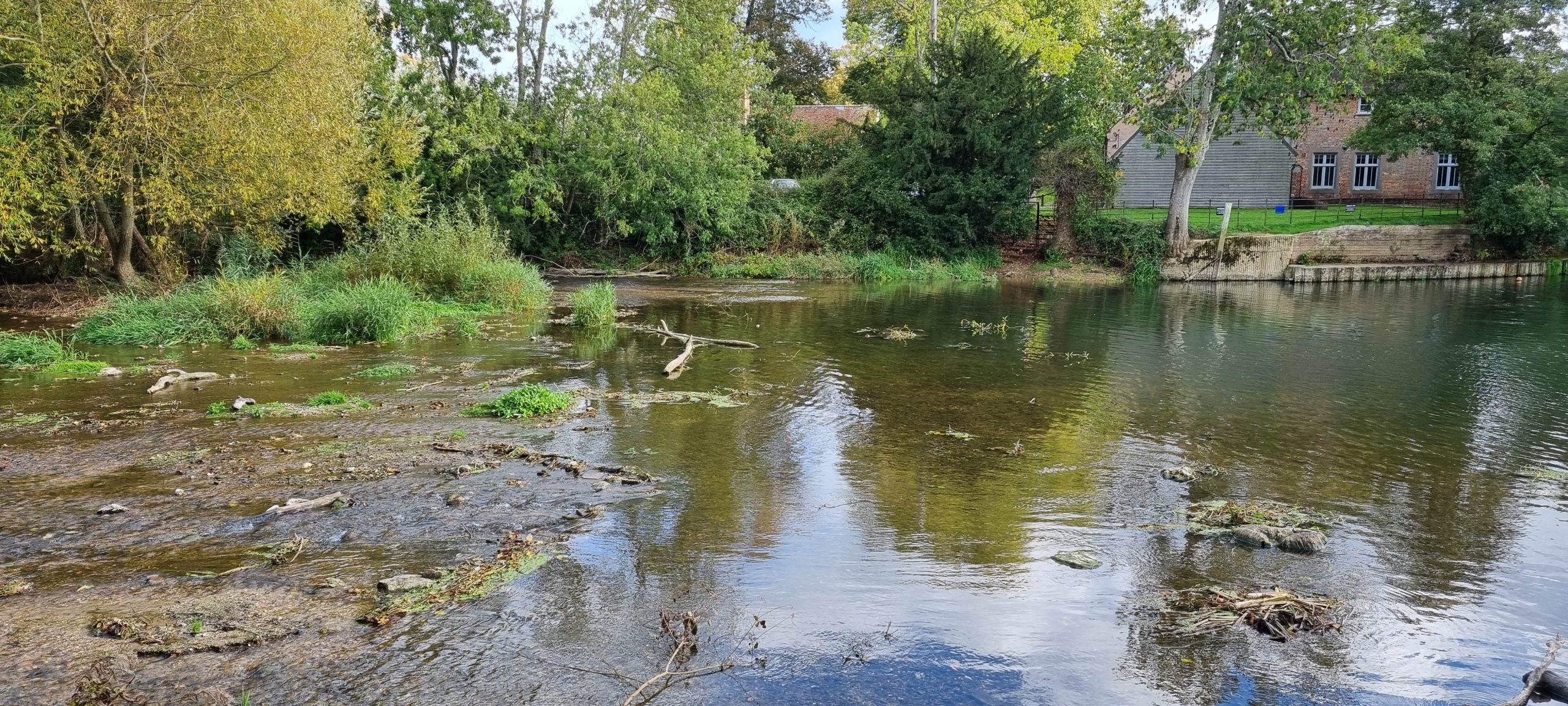
Funded by Wessex Water and co-ordinated by Dorset Wildlife Trust, the project is designed to improve the water environment of Dorset by recruiting and training teams of local volunteers as Water Guardians. Their task is to visually monitor a stretch of their local river at least once a month, identify possible pollution incidents and report them to Wessex Water for further investigation. Water Guardians are additional eyes and ears on the ground, playing an essential role in both maintaining the health of their local river, and improving the quality of the habitat for wildlife. As well as monitoring pollution to improve water quality, water guardians also help with picking litter, recording wildlife sightings, and reporting any other issues found along their stretch of the local river. The water guardians upload their findings onto River hub where all data for that river can be found.
If you would like to become a water guardian and to find out more visit :
https://www.dorsetwildlifetrust.org.uk/things-do/volunteering/water-guardians
Riverfly Monitoring
https://www.riverflies.org/riverfly-monitoring-initiative-rmi
The Riverfly Monitoring Initiative (RMI) is a nationwide citizen science scheme. The scheme is run by the Riverfly partnership and in Dorset it is co-ordinated by the Dorset Wildlife Trust.
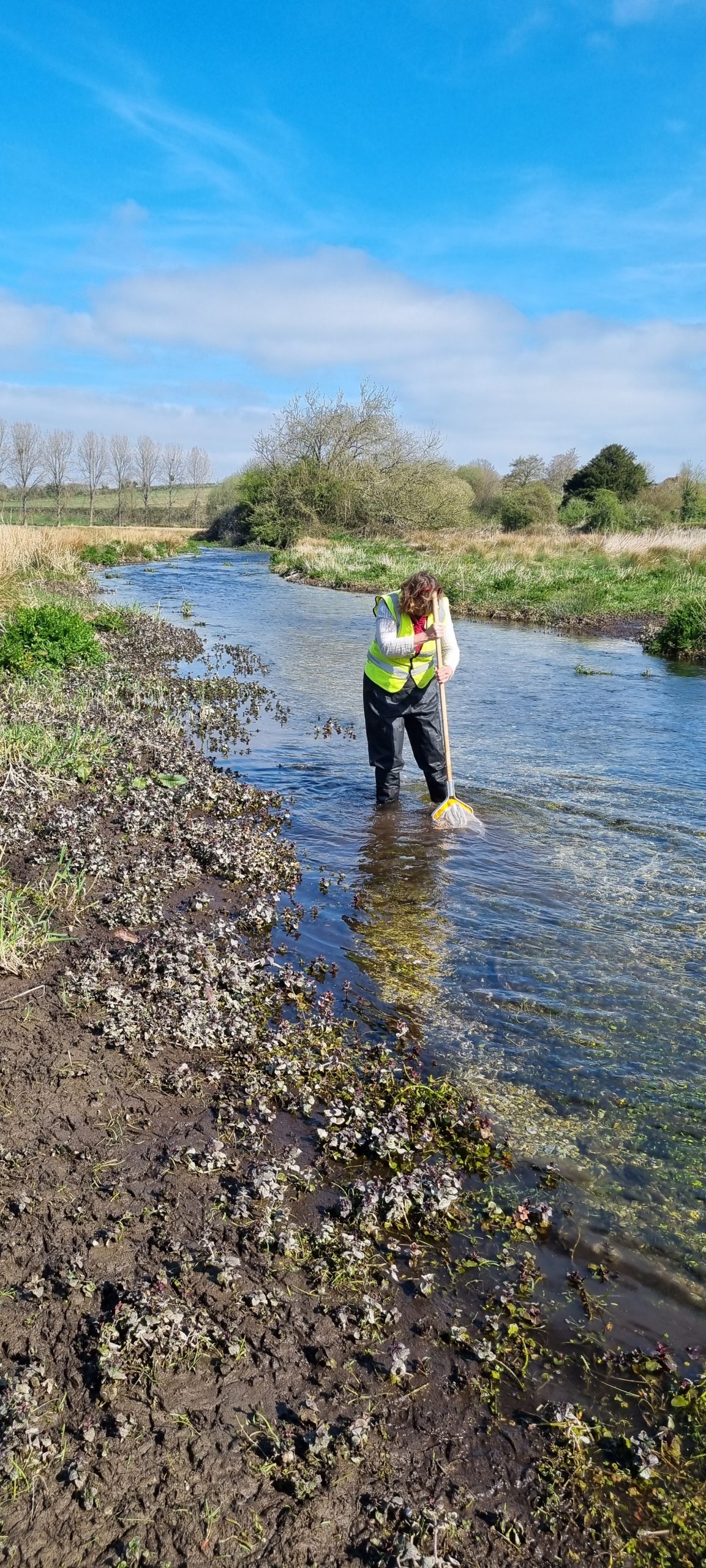
Volunteers undertake a monthly, simple standardised sample of river invertebrates at set points and collect long-term data on riverfly populations.
The data collected from the Riverfly monitors is used alongside routine monitoring by the EA/SEPA/NRW/NIEA ensuring the water quality is checked more widely and often and any severe changes are detected early so remedial action can be taken at the earliest opportunity. Data is uploaded to Cartographer and is freely available to view and download under the terms of the Open Government Licence. It is also available now on Riverhub.
Why Riverflies?
Riverflies are invertebrates that spend most of their life cycle in a river, stream, pond or lake. Along with other freshwater invertebrates, they are at the heart of the freshwater ecosystem and are a vital link in the aquatic food chain. Their common characteristics of limited mobility, relatively long life cycle, presence throughout the year and specific tolerances to changes in environmental conditions make them useful indicators of water quality, pollution, siltation and low flows.
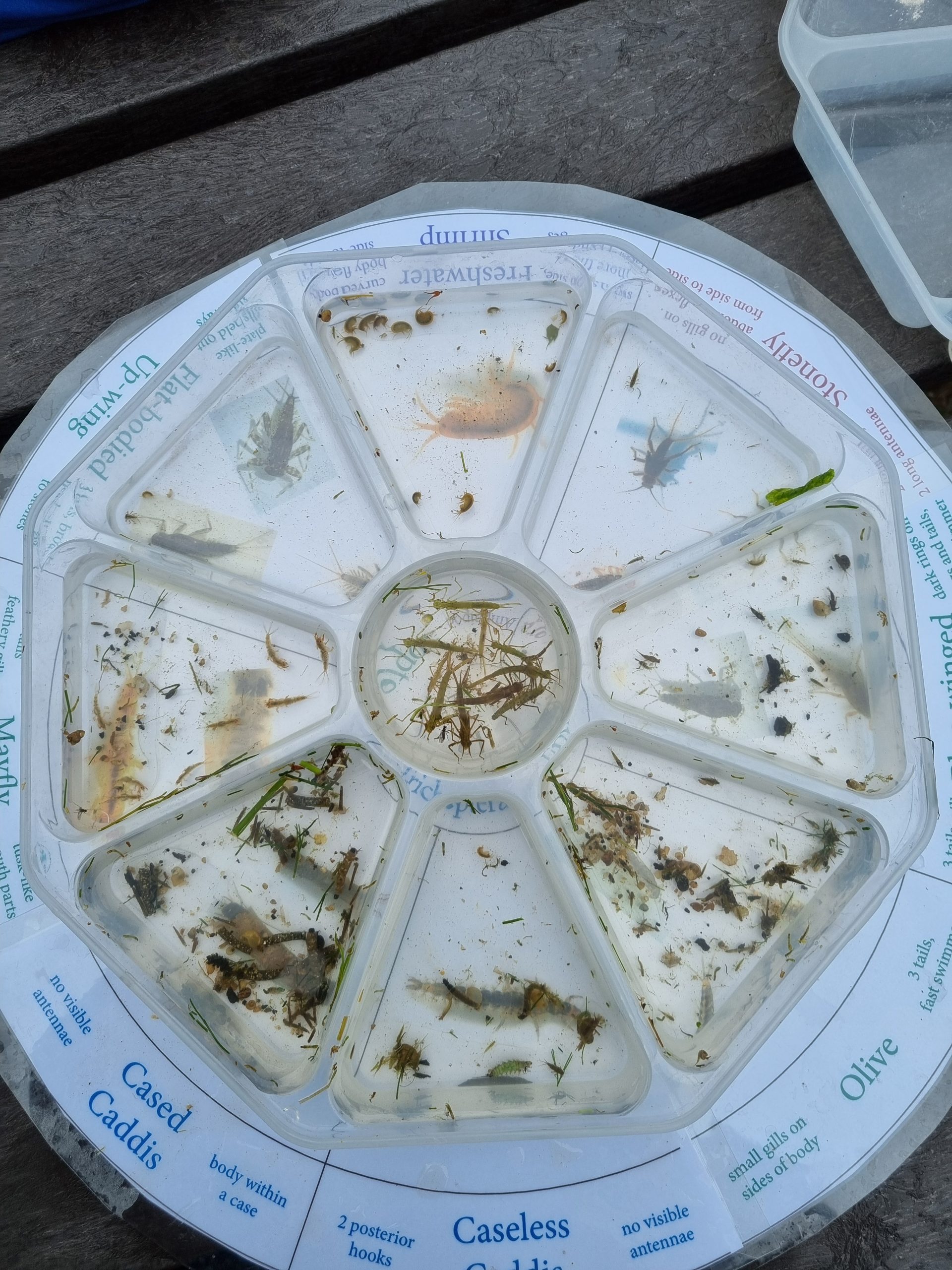
The RMI focuses on three key groups of riverflies: the up-wing flies or mayflies (Ephemeroptera), caddisflies or sedges (Trichoptera) and stoneflies (Plecoptera).
Because these are highly sensitive to changes in water quality, this makes them useful indicators of river health – they are the canaries of the rivers. Monitoring their populations can allow us to quickly identify issues such as pollution events, as well as keep track of the ecological impacts of any changes, positive or negative, to the river habitat.
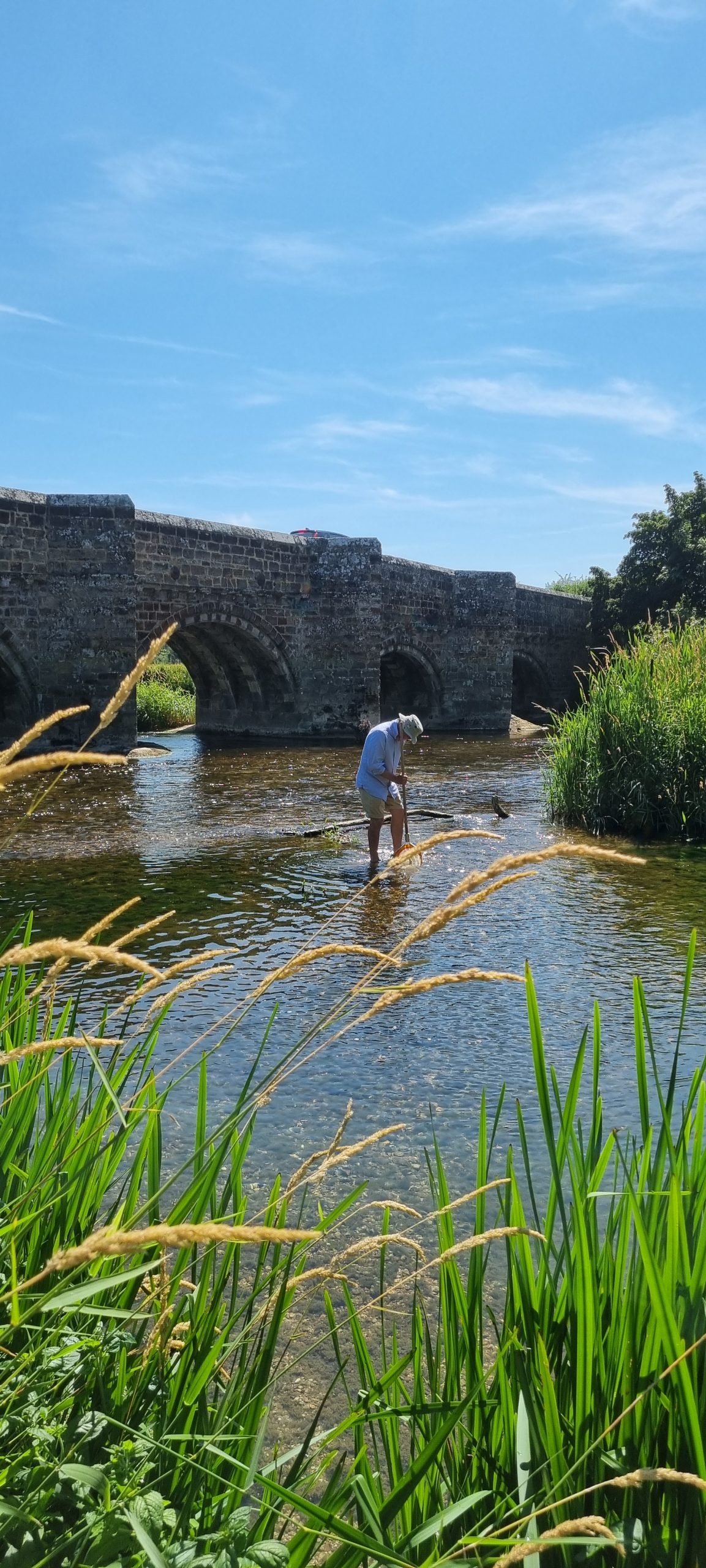
Method: Using a standardised net, the volunteer undertakes a 30 second surface search, followed by a 3 minute kick sample across the river and a further 30 second search on the stones. The sample is sorted into the various groups, counted and scored. The sample receives an overall score and if this is below a ‘trigger level’ the volunteer will repeat the sample within 48 hours and if it breaches this trigger level again, they will alert Wessex Water and/or the EA.
How to become a Riverfly Monitor?
Training is provided by Dorset Wildlife Trust. Contact riverfly@dorsetwildlifetrust.org.uk
What We Have Found
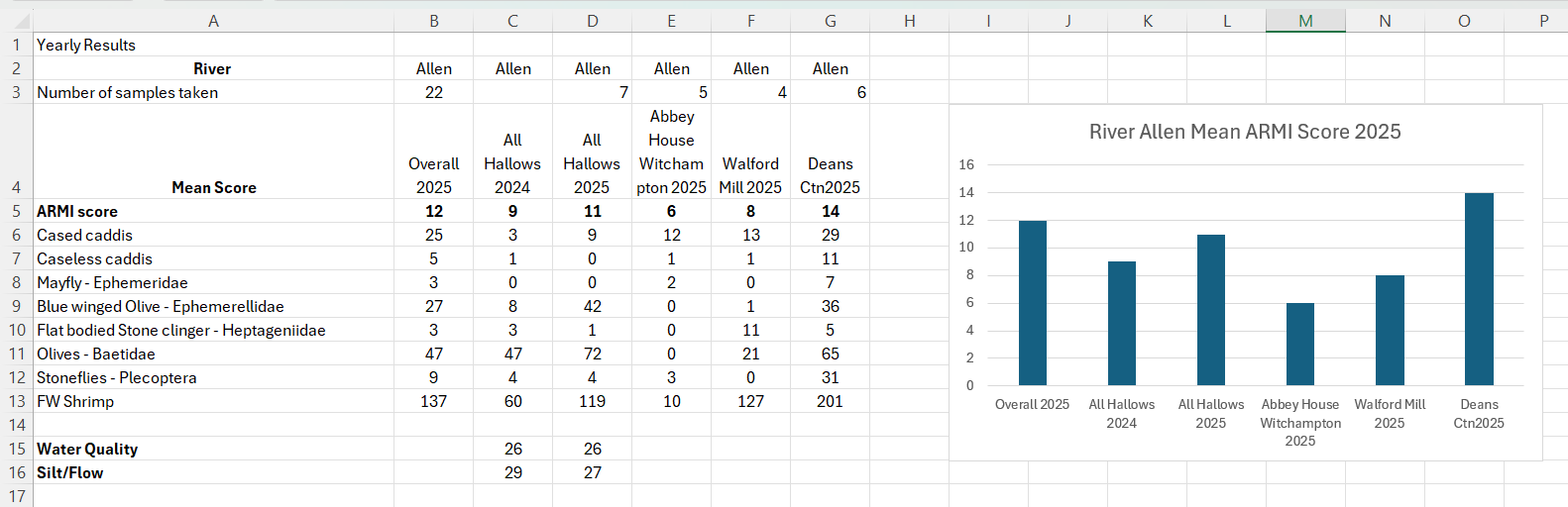
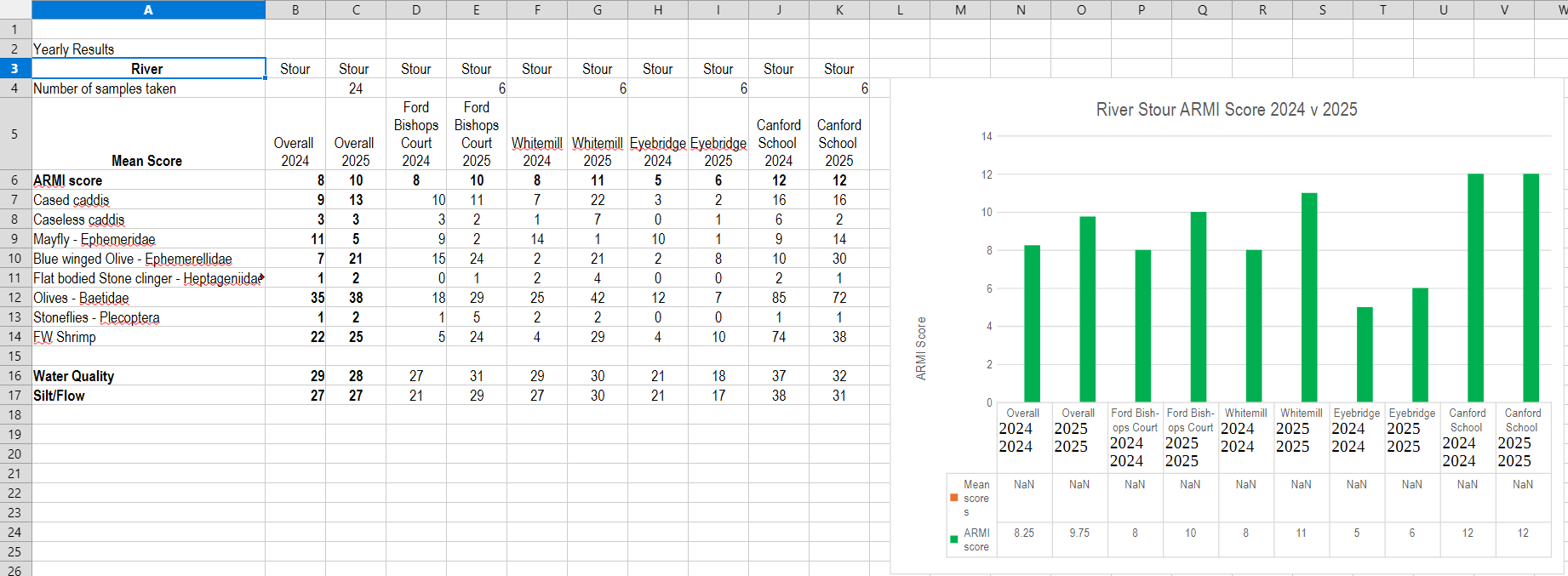
We have only been collecting data for a few years, but the more we collect the more we can spot the trends for each site over the years.
Earthwatch Waterblitz
https://earthwatch.org.uk/greatukwaterblitz/
The Great UK WaterBlitz is a biannual campaign organised by Earthwatch Europe, calling on everyone to go outside and test the quality of freshwater bodies, including rivers, streams, lakes, ponds, canals and wetlands. This vital data provides a useful snapshot in time and helps to build a clearer picture of water quality across the UK. These events are part of our global FreshWater Watch programme.
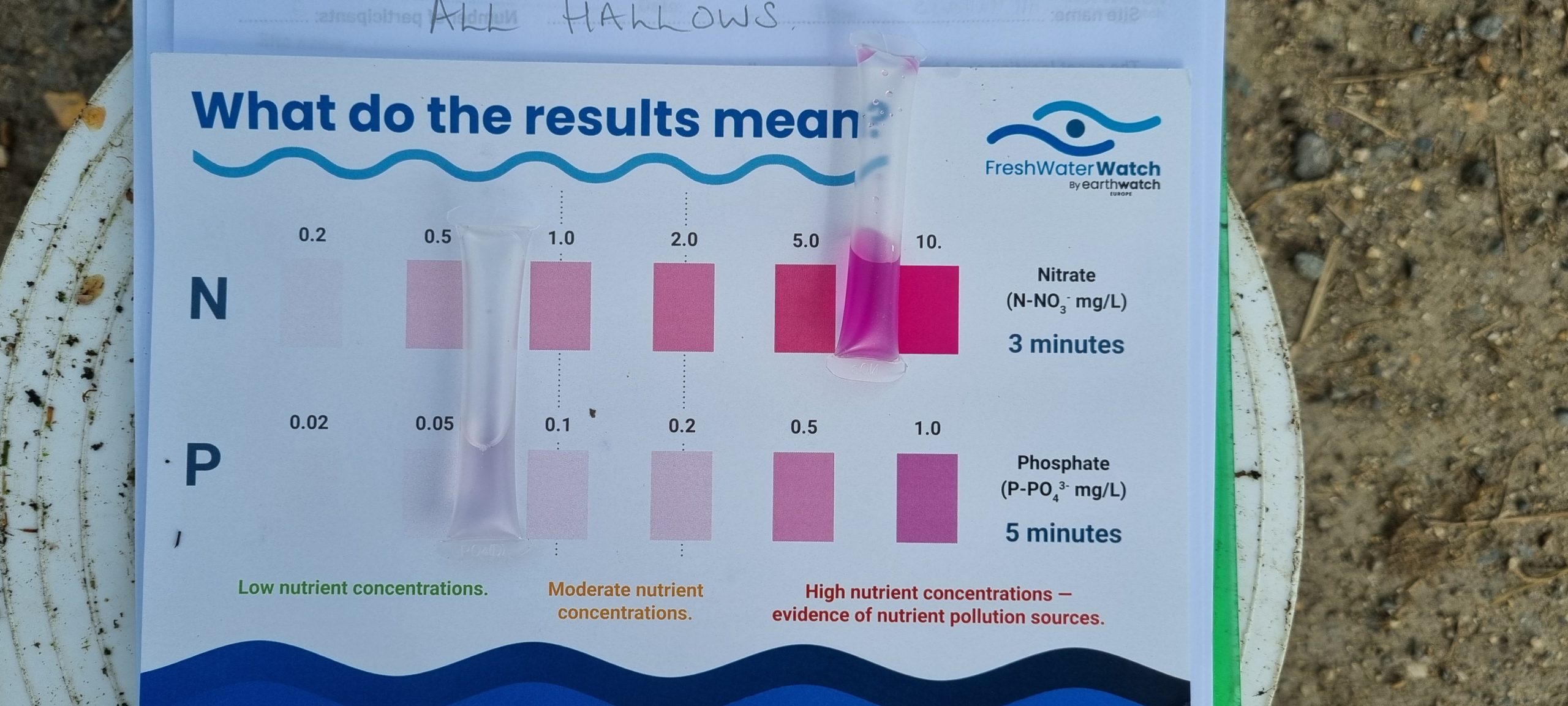
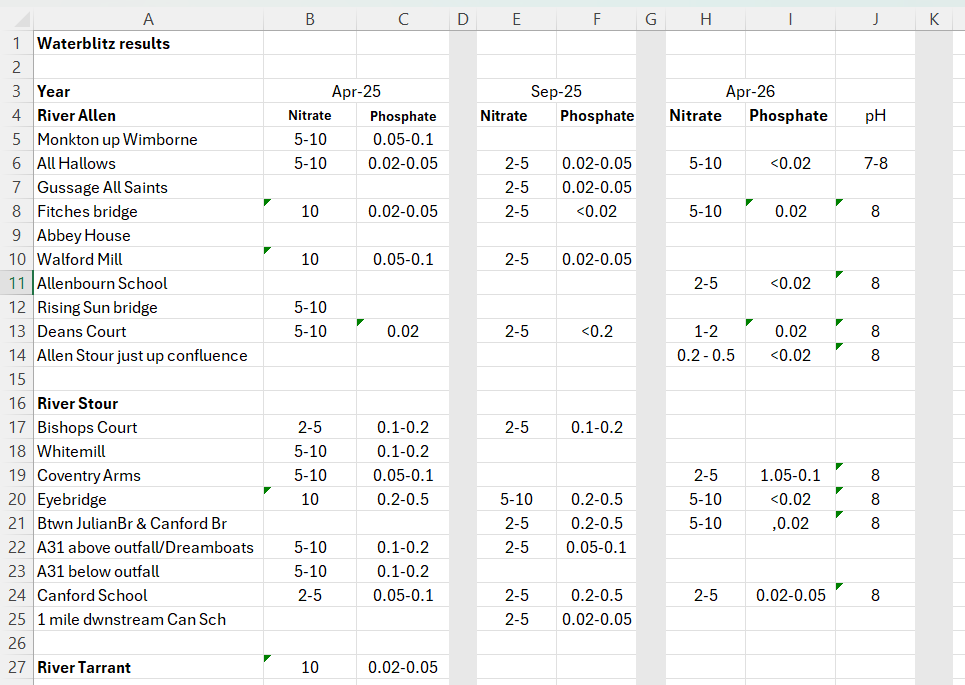
Sampling takes place in April and September at points along the rivers and water tested for nitrates, phosphates and pH. This tells us the levels of nutrient pollution in the river which can affect the ecological health of the river.
Would you like to take part:
If you would like to sign up to do the tests, please join with the link above. It would be helpful to let Rivers for Wimborne know by emailing riversforwimborne@gmail.com so we can co-ordinate where samples are taken to avoid duplication.
Why We Measure Nitrates And Phosphates
Nitrates: Nitrate tests help pinpoint exactly where pollution is entering the water. High levels in rivers typically indicate:
- Agricultural runoff: The leaching of nitrogen-rich synthetic fertilizers and manure from nearby farm fields.
- Sewage discharges: Untreated or inadequately treated effluent entering the water system from treatment works.
While nitrogen is a natural plant nutrient, excess nitrates act like concentrated plant food in a river. This leads to a harmful process called eutrophication, which causes:
- Algal blooms: Rapid, uncontrollable growth of green algae that forms a thick layer over the water.
- Sunlight deprivation: The thick mat of algae prevents sunlight from reaching underwater plants, stunting their growth.
- Oxygen depletion: When the algae die, bacteria break them down and consume massive amounts of dissolved oxygen in the water. This drop in oxygen levels can lead to mass fish die-offs and harms other aquatic creatures.
Many local authorities and water companies extract raw drinking water from rivers and boreholes. [1, 2]
- High nitrate concentrations in drinking water can pose a health risk, particularly to pregnant women and infants.
- It can cause methaemoglobinaemia (known as “blue baby syndrome”), a serious, potentially fatal condition where blood struggles to carry oxygen. [1, 2]
Phosphates:
Testing rivers for phosphates is critical for tracking ecological health and identifying nutrient pollution. Elevated phosphates—originating from agricultural run-off, animal waste, and sewage effluent—act as a fertilizer for aquatic plants and algae. This causes rapid plant overgrowth and massive algal blooms that block sunlight and starve the water of oxygen, devastating the river’s food web.
Tracking phosphate levels helps authorities and citizen scientists trace the nutrients back to their root causes. Common sources include leaking freshwater/sewage pipes and agricultural fertilizer run-off.
Safe freshwater generally requires low phosphate concentrations (typically below 0.1 mg/L as PO₄). Routine monitoring ensures waterways meet required standards, such as those set for protected wildlife sites.
Community Engagement
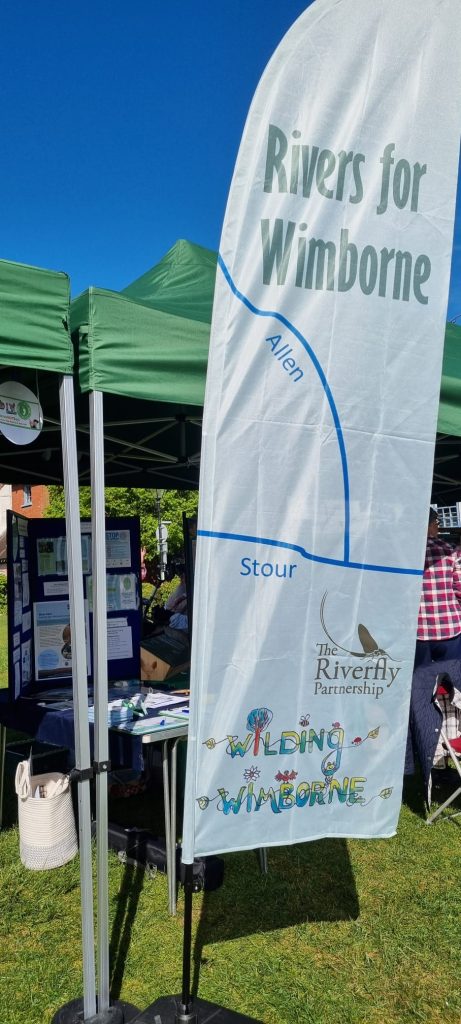
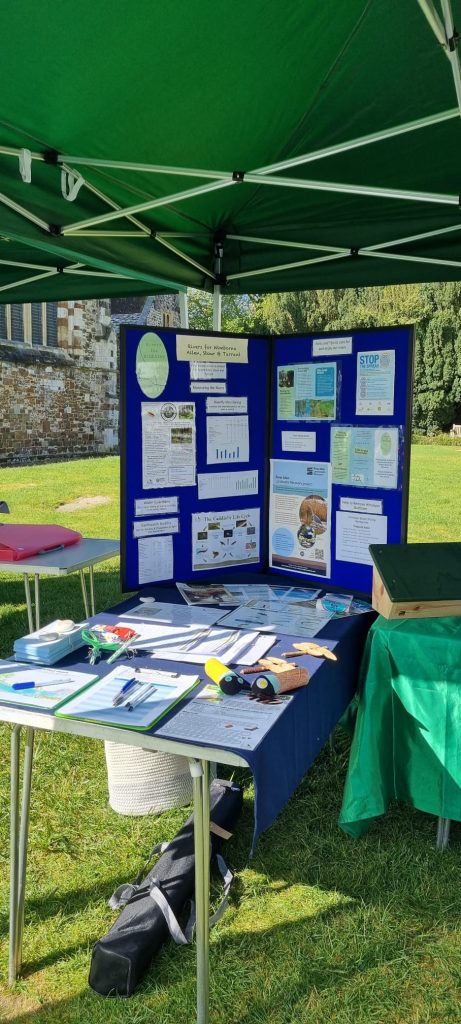
Rivers for Wimborne are present at several community events to try and spread the word about the Rivers and the actions we can all take to help protect them.
We hold several river dipping events during the year to show the public what lives in the River Allen and explain to them the importance of the riverflies and other invertebrates and how we can take action to help them. We also hold talks and meetings.
- Spring Green Festival in March
- Green festival in October including evening talk about the river.
- Folk Festival in June
- Allendale open day
- Annual meeting to share results and prepare actions for the following year.
For dates see events section above
Schools:
We are also working with local schools to raise awareness of the rivers and what they can do to help and show them how citizen science and riverfly monitoring can help.
Invasive Species
Himalayan balsam: Impatiens glandulifera
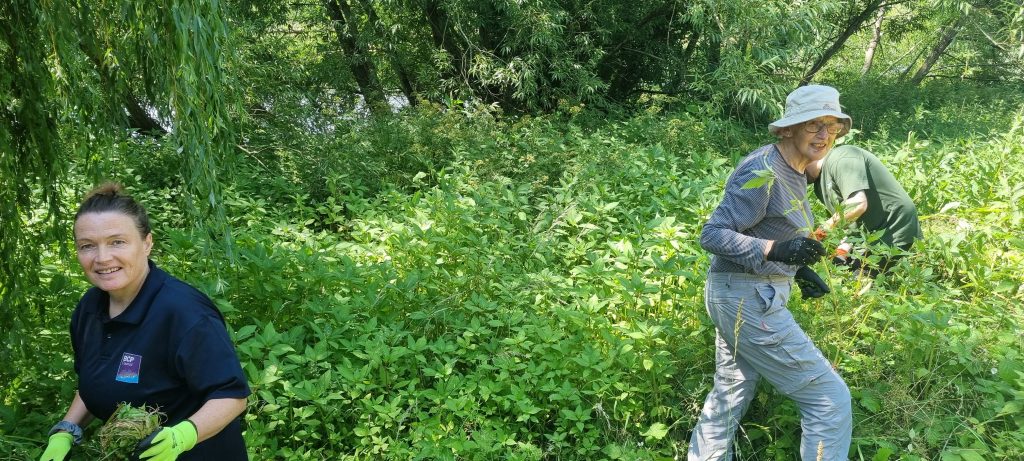
Himalayan Balsam is a non-native, invasive species which is registered under Schedule 9 of the Countryside and Wildlife act 1981 as a species that can cause harm to native British habitats. Himalayan balsam was introduced as a garden plant in 1839, but soon escaped and became widely naturalised along riverbanks and ditches, especially close to towns. It is fast-growing and spreads quickly, invading wet habitat at the expense of other, native flowers. Its explosive seed pods aid its spread by sending the seeds into the river, causing further dispersal downstream. Removing Himalayan Balsam before it seeds is an ongoing task that, over several years, will help reduce the seed bank of balsam, which will stop the source of seeds entering the river and being carried downstream to establish in another area.
Work parties:
We work with the East Dorset Green Spaces Team to remove the invasive non-native Himalayan Balsam. To join the workparty contact Will on William Weatherill-Podbury William.Weatherill-Podbury@dorsetcouncil.gov.uk
For dates and times of the next workparty see events page
Hints And Tips To Care For And Enjoy Our Rivers
Caring for the Riverbanks
- Leave native plants to stabilise banks and support wildlife
- Let sleeping logs lie – fallen trees create habitat in rivers.
- Prevent dogs from trampling bankside vegetation
- Report invasive species e.g. Himalayan Balsam.
- Observe wildlife quietly and avoid disturbance.
Protecting River Water
- Please take litter home
- After spot on flea/tick treatments, keep dogs out of the river for 2 weeks. Consider alternatives e.g. tablets.
- Follow fishing closed seasons to enable fish breeding.
- Take all fishing equipment home. Check, clean & dry equipment to avoid contamination.
- Paddleboarders, avoid shallow gravel beds, wash kit after use.
- Avoid harmful chemicals entering the drains.
- Keep gardens permeable to reduce runoff.
Use Less Water
- Take shorter showers – 4 mins
- Turn off taps when brushing teeth.
- Fix leaky taps and loos promptly.
- Only run dishwashers and washing machines when full.
- Use water butts and watering cans. Water in morning and evenings.
- Mulch gardens, choose drought tolerant plants, avoid watering lawns.
- Wash cars with a bucket and sponge.
- For new builds consider installing rainwater tanks.
Fishing Seasons & Permissions
Fishing Seasons:
- Coarse Fishing: 16th Jun – 14th
- Brown Trout: 1stApr – 31st
- Sea Trout: 15thApr – 31st
- Salmon Fishing: 1stFeb – 31st
Licences:
- Free EA licence for ages 12 – 16 (online)
- Permission also required from fishing rights owner.
- Report illegal/out of season fishing: 0800907060
Get Involved
Rivers for Wimborne is part of Wilding Wimborne. Volunteers work to protect our local rivers through monitoring and community care.
For more information contact wildingwimborne@gmail.com
Report Pollution incidents: 0800 807060
Swimming
Be aware of water-borne diseases e.g. Weils disease, gastrointestinal illnesses. Follow precautions.
Contact Us
To find out more about Rivers for Wimborne please email us at