Trees for Wimborne
About Us
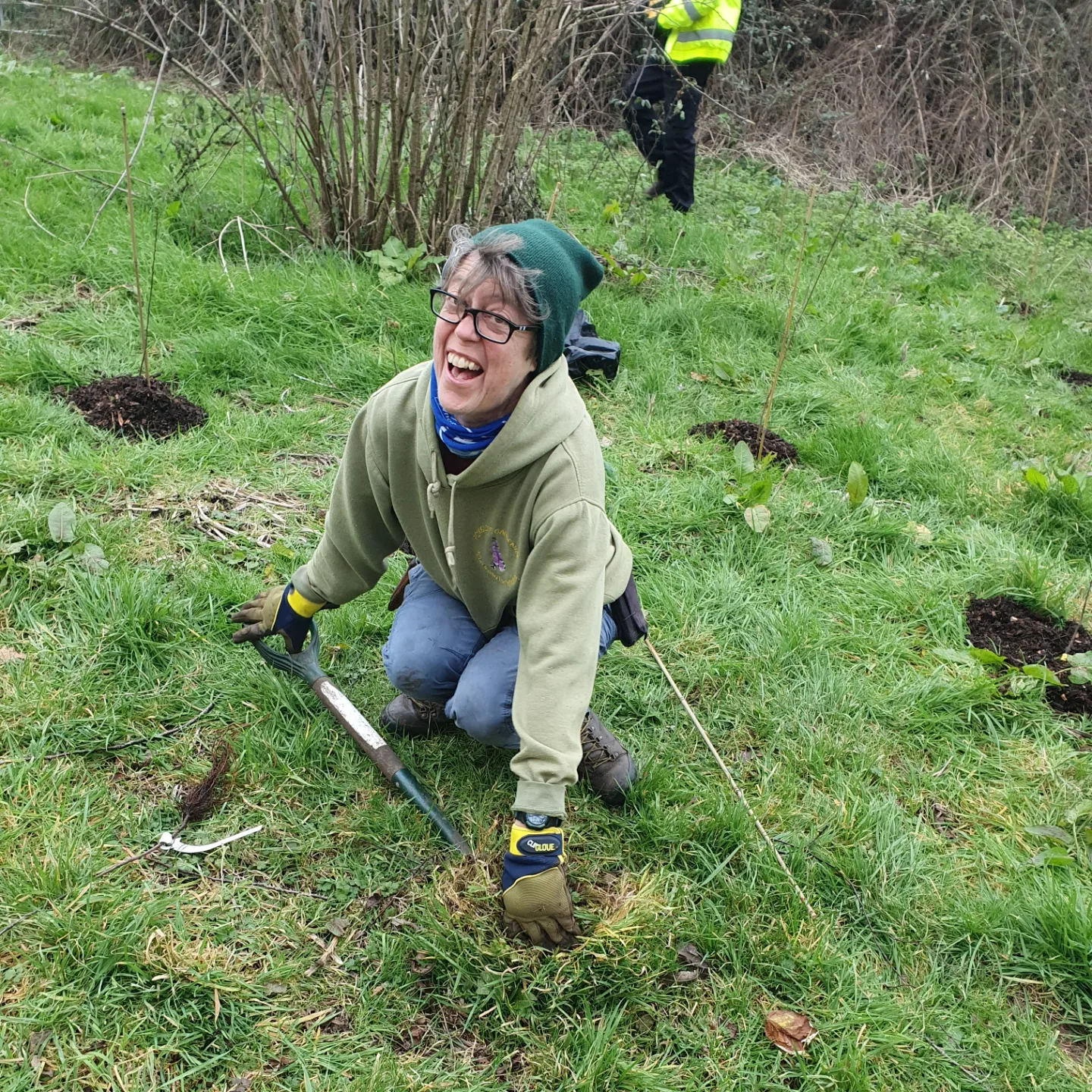
We are a small community action group with a big vision and a passion to see a significant increase in tree numbers in and around Wimborne. We concentrate on planting native and some naturalised trees as this will help wildlife. Each winter we have several tree planting days, and we take great care and pride in caring for our newly planted trees during the summer months. We also grow some of our own trees at a nearby tree nursery; these are mainly our very rare Native Black Poplars which cannot be obtained commercially.
We don’t have a membership and welcome all to join us, however much or little you know, and however much or little time you have to spare.
We have two active workstreams, planting on greenspace and planting Native Black Poplars in our river valleys, but we would love to be able to begin planting on our streets.
If you want to help please look at Our Activities page or if you simply want to be added to our email list please contact us at treesforwimborne@gmail.com
Why Are We Doing This?
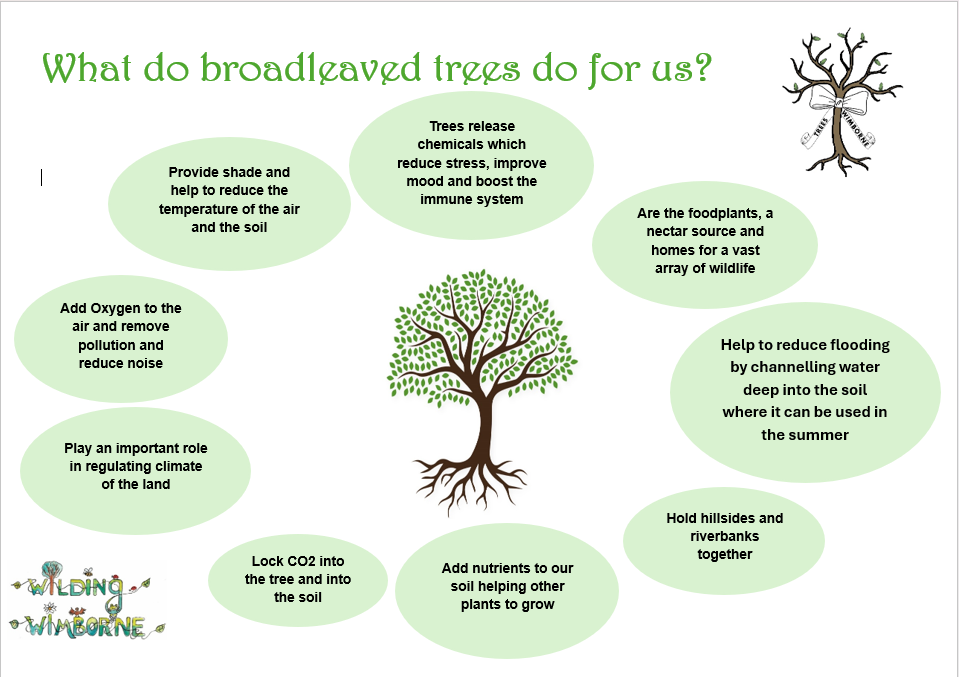
Trees are just amazing, without them the whole planet would not have become the fertile, verdant and habitable place that we now call home, and maybe take for granted. The list of benefits they bring is long, but include improving the health and wellbeing of us all, creating more beautiful and more comfortable spaces to enjoy living in.
All urban populations are facing rising temperatures, more frequent and extreme weather events including windier wetter winters and hotter drier summers, whilst we know that the animals and plants that we share our world with is under severe pressure and biodiversity is being lost.
Wimborne with its small size and rural location is buffered from some of these effects, but we cannot escape them all and action is required.
Urban trees are a proven, nature-based solution to make our towns more resiliant to the climate crisis, cooling the streets and greenspaces, reducing the risk of flooding as well as providing space for nature and wildlife to thrive. We need trees now as much as we ever did and they can help us deal with changes that we know are coming if we let them into our lives and towns.
But like many places in the UK we have much less tree cover than the rest of Europe. Many towns and cities have been working hard for some years to redress this by planting large numbers of trees and Trees for Wimborne is endeavouring to ensure that Wimborne is following this example .
Our Planting Projects On Wimborne's Green Spaces
We have created areas of new habitat and are restoring existing habitat on 3 very different sites, all well used by the public and owned by Dorset Council.
We have planted over 2,000 trees on these sites, in each space we have tried to make sure there is a wide diversity of species which will benefit both wildlife, the landscape and create interest for every season. Each has its own character, and each is designed to suit the soils and the position.
Many of the trees planted have been grown by TfW but we have also benefited from saplings received from the Woodland Trust Community Scheme. We have also been lucky enough to have been gifted trees from Upton Tree Specialists, and last year, the Minster Environmental Group helped to fund our latest Dogdean project.
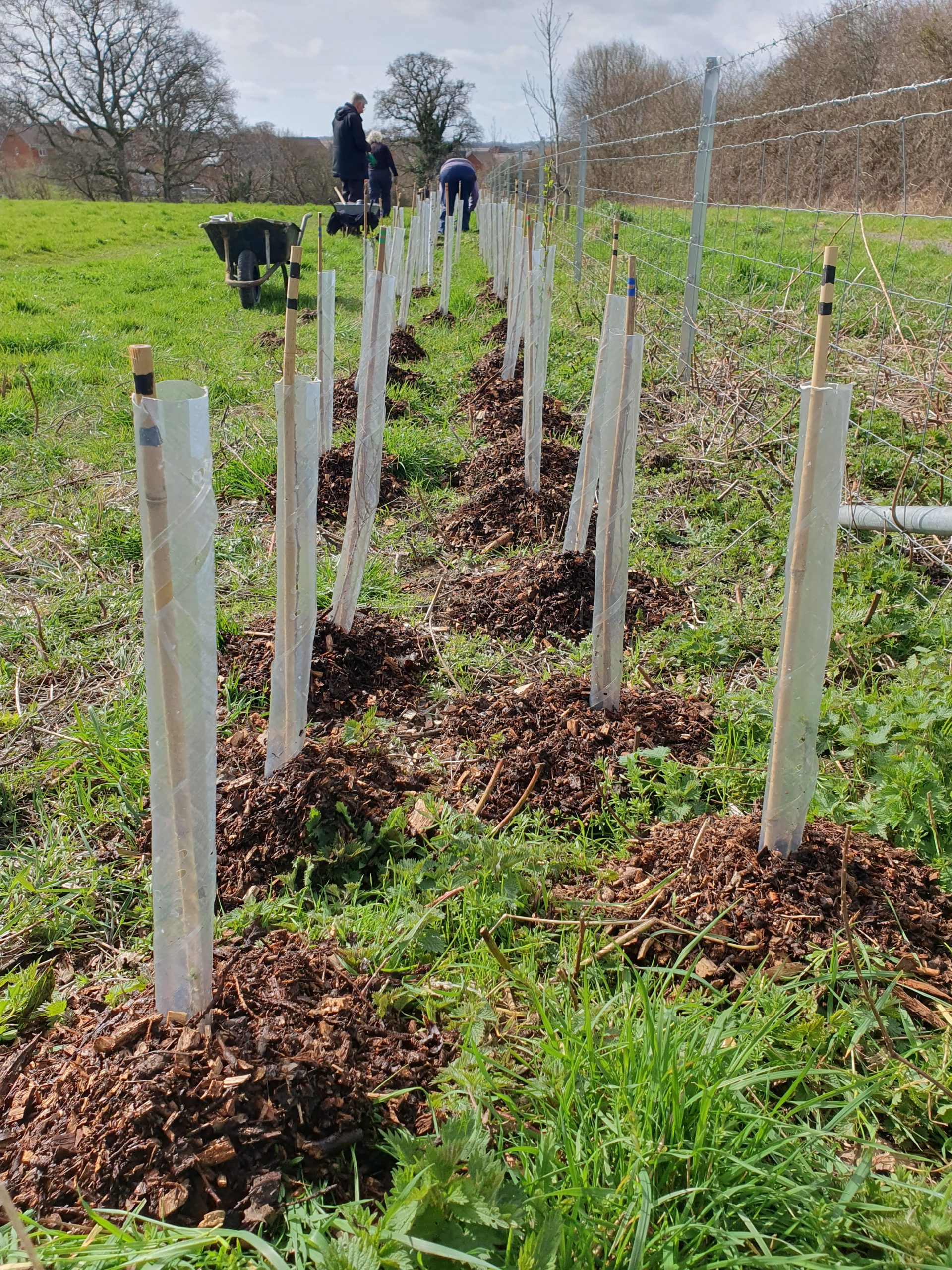
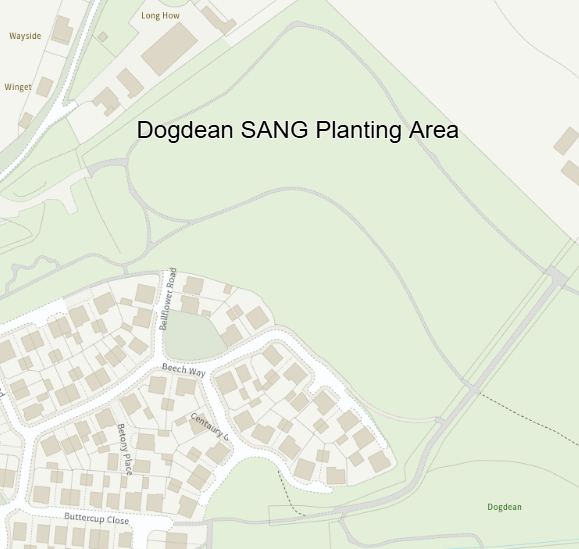
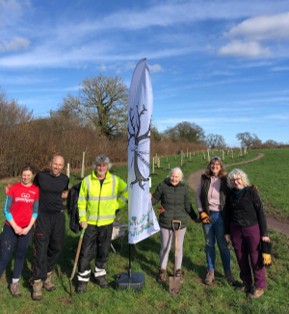
Dogdean SANG is a pastoral landscape and we have added to the hedgerows as well as provided areas of woodland fringe. One of several standards we have planted is the Small Leaved Lime, this is underrepresented in the UK’s woodlands but is an incredibly good source of nectar for bees, and according to Professor Dave Goulson of Sussex University, one tree can attract more than 10,000 bees! We have also introduced Hornbeam to the site as we believe this may do well in the changing climate. Watch out for Wild Service Trees which have become extremely rare, and many other trees chosen for their blossom fruit and nuts to help sustain a variety of wildlife which share this space with us.
We also hope that our planting will add shelter as we know this site can be a tad breezy and make the space a more interesting place to walk and spend time.
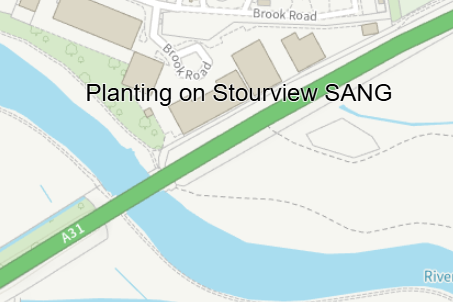
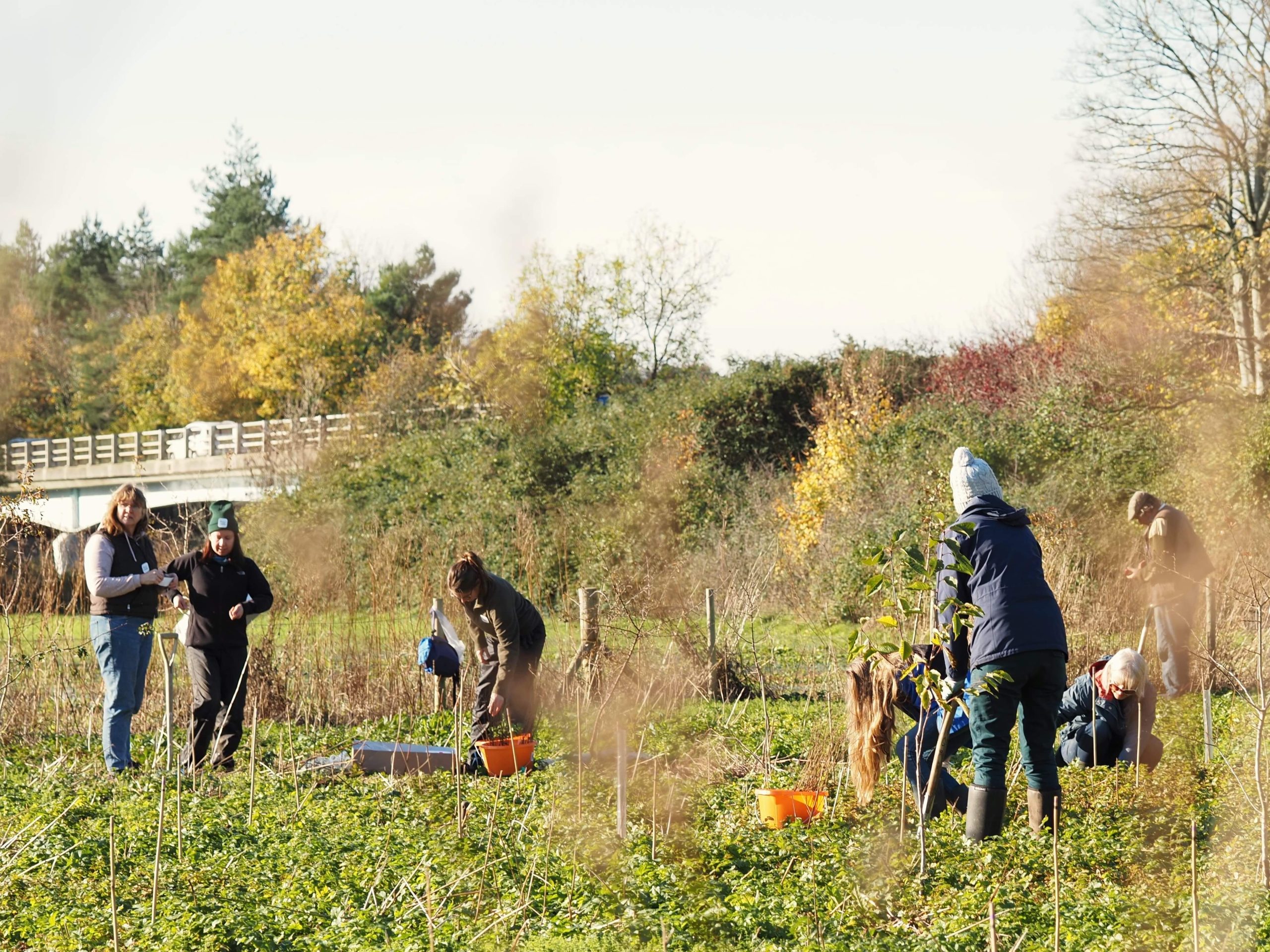
Stourview SANG is a wetland site and we have planted mainly wetland species including Goat Willow which flowers early in March, there is at least one species of bee which times its emergence to coincide with the flowering of this tree. You can also see some of our young Native Black Poplars here. We hope that one of them will be visible from the circular paths in another year or so.
We have also planted a strip of trees and shrubs between the riverside path and Brook Road to augment the existing trees. The aim has been to create a woodland edge which is good for biodiversity and also screens the industrial buildings making it a nicer walk to the SANG. It has been a very challenging place to plant but we are hopeful that both areas will be very lovely in years to come.
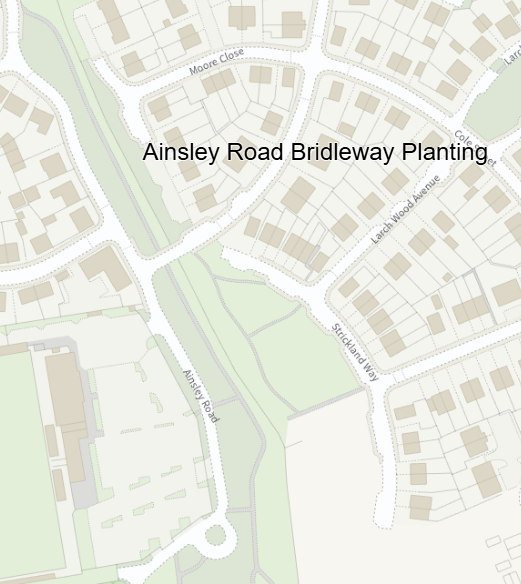
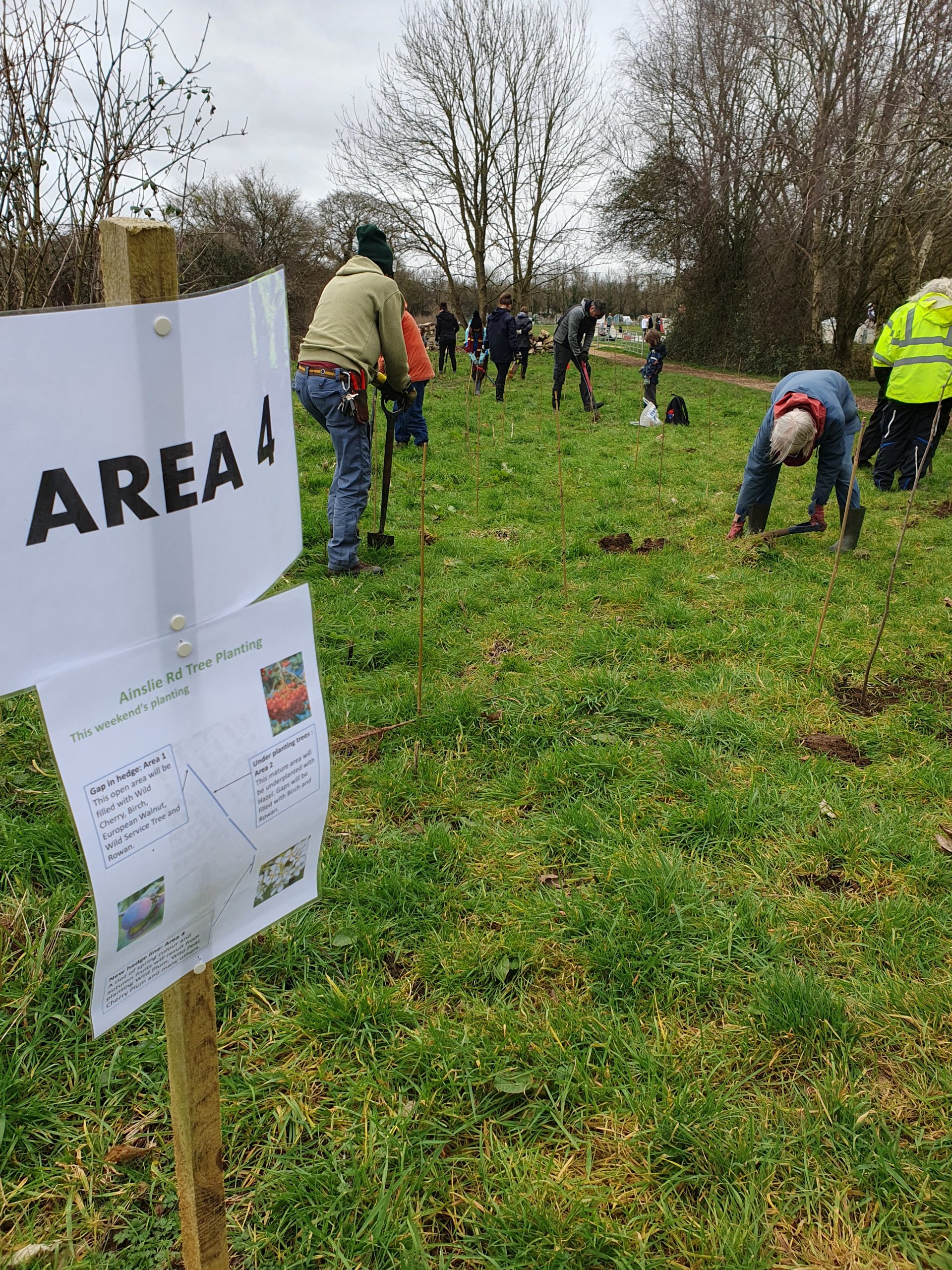
Ainsley Road When we first saw this site the hedge line was in a very poor state dominated by dead Elm. With the arrival of the new estates there was the opportunity to give it the loving care it deserved. It was dividing what was a field of rubble, and is now a newly created greenspace, from a bridleway. This was also the route of a Roman road. Dorset Council cleared the Elm, Upton Tree Specialists cleared the brambles and Trees for Wimborne set to. We created a narrow woodland tongue, taking advantage of the changes in character along its length. We wanted to create as much interest and biodiversity as possible. At its northern end we underplanted existing Oak with Hazel and in the gaps planted Rowans and Wild Cherry, for blossom and fruit. The central stretch had become very open and we have put in a hedge line with beech and birch among fallen elm which is great dead wood habitat. At the southern end there was an open space where we planted wild fruit trees, which, this year have begun to blossom.
This has been a difficult site and at times we felt that the brambles were winning and Trees for Wimborne were losing. But, with perserverence and many hours of hard work from undeterred volunteers we are starting to see the beginings of what we hope will be a lovely place to people to walk, and a variety of wildlife to find a home.
Our Streets
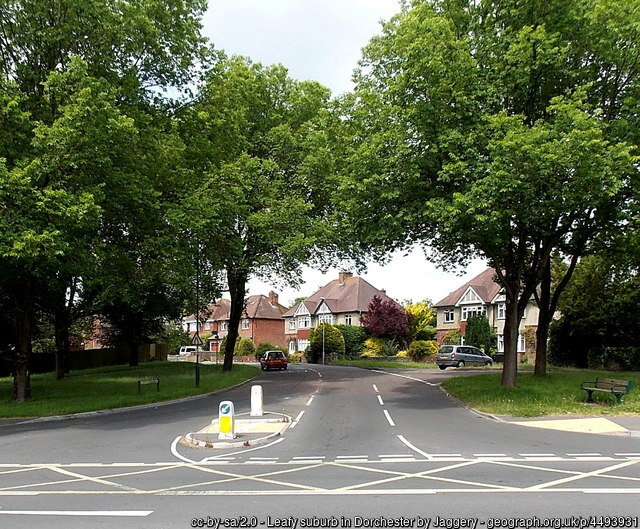
Many of the older parts of the town were provided with trees by forward thinking Victorians who recognised the importance of trees in our towns. Some of our recently built areas have also benefited from street tree planting as part of the Planning rules. But there are many streets that fall in between and have few if any trees. Some of these are thoroughfares, but even the smallest of them are used to walk and to cycle. In the summer they can be uncomfortably hot.
We would like to see more areas in Wimborne benefitting from tree canopy cover which would keep the ground and the air cool.
This is going to take a lot of work to take this stream of work forward and so far, sadly, we have nothing to celebrate, yet!
Our Native Black Poplars
Our Native Black Poplar project is such a central part of what we do it warrants it’s own page. Please click this link Native Black Poplar to explore more.
Our Benefactors
A big thank you to Upton Specialised Tree Services who provide the space to grow our trees; to Forest Research who have confirmed that the trees we use to provide our cuttings are Native Black Poplars, to those bodies that have given us funding and to those people who have given us donations.
Last but not least thank you to all the landowners who have planted our trees on their land.

Contact Us
To find out more about Trees for Wimborne please email us using the link below. We send out periodic updates for our activities on a mailing list, if you would like to be added to this list please mention in your enquiry.